

You are standing in the driveway looking at a car that has not started since spring. Maybe the transmission quit. Maybe the repair quote came back higher than the car is worth. Maybe a fender bender ended its run for good. So you open your phone and type “scrapyard near me,” and the map fills with pins. Now you have a new set of problems. Which yard? How does the car get there? What will they pay?
This guide answers those questions in plain language. We will look at how scrapyards in Orlando work, what the trip really costs, and why a growing number of owners let a local buyer come to them instead. Pick and Pay Orlando buys cars and trucks in any condition, and by the end you will know which route suits your situation.
What Does a Scrapyard Actually Do With a Car?
A scrapyard takes end-of-life vehicles and turns them into raw material. The car is weighed, its fluids are drained, and eventually the body is crushed and shredded so the steel and other metals can be melted down and used again. Some yards pay by the pound. Others give a flat figure after a quick walk around the vehicle.
Either way, the logic is the same. The yard is paying for weight and recoverable metal. It is not paying for the fact that your car ran beautifully until last Tuesday, or that the interior is spotless, or that the engine only needs one repair.
That is the key thing to understand before you go anywhere. A scrap price is the floor of what a vehicle is worth. For many cars and trucks, the real value sits above that floor, and a buyer who looks at the whole vehicle will often reach it.
Is Searching “Scrapyard Near Me” Always the Smartest Move?
It is the most natural move, and sometimes it works well. But the search has a few quiet traps.
First, a pin on the map is not a promise. Some listings are outdated, some are recycling centers that only take loose metal, and some are closed on the day you finally have time. Second, proximity does not equal price. The closest yard is not automatically the one that pays best. Third, the search assumes your car can reach the yard, and a car that will not start cannot.
Orlando also sprawls. A yard that looks ten minutes away on the map can take forty in afternoon traffic, especially near the major highways. If you have to arrange a tow, the “near me” advantage shrinks quickly.
None of this means yards are bad. It means the search result is a starting point, not an answer. Ask what the trip will cost you before you commit to it.
How Much Does Getting the Car There Really Cost?
Most people forget this part until they are on the phone with a tow company. If the car does not run, you need a flatbed or a wrecker. Towing in a busy metro area is billed by distance and time, and a short job can still cost a meaningful amount. On a low-value car, that fee can eat a big slice of what the yard pays you.
Then there is your own time. Taking half a day off work, waiting at the scale, filling in paperwork, and driving back home without a car adds up. If you are a single-vehicle household, you may also need a ride home.
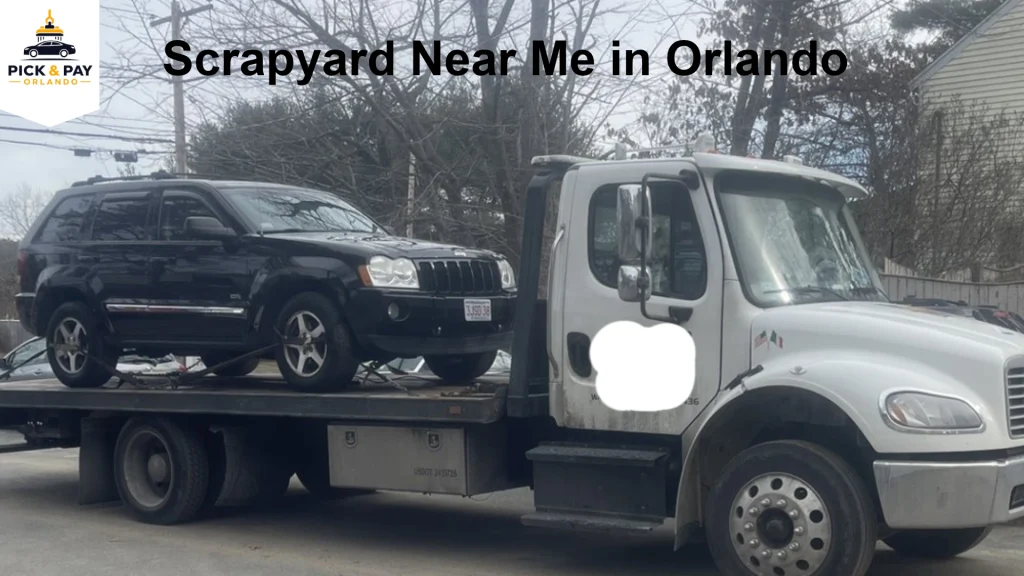
Compare that with a buyer who sends the truck to your address and handles the hauling at no charge to you. On a car worth a few hundred dollars, free towing is not a small perk. It can be the difference between a decent result and a disappointing one.
What Happens When a Car Buyer Comes to You?
The process is shorter than most people expect. It follows the same four steps you can see on our How It Works page.
You share the basics: make, model, year, and what is wrong with it. You can call or use the Get Offer form. A buyer reviews those details and comes back with a fair figure, usually within minutes. If the number works, you pick a time. Same-day slots are often available when you are in a hurry. When the driver arrives, he looks the car over, confirms it matches what you described, completes the paperwork with you, and pays you before the tow begins.
Notice what is missing: no listings, no strangers asking if the car is still available, no haggling in a parking lot, no driving to the other side of town. For anyone who simply wants the car gone, that simplicity is the whole point.
Which Cars and Trucks Can You Sell?
Almost anything with wheels. That includes cars that run fine, cars that do not run at all, vehicles damaged in a collision, vehicles with a flooded interior, high-mileage commuters, and cars that have sat under a tree for years.
Trucks, SUVs, and vans are welcome too. Full-size pickups, work trucks, family minivans, and older utility vehicles all find buyers. Heavier vehicles often attract stronger offers because they carry more metal and more resale interest.
If you drive a particular brand, check our brands page or the dedicated Dodge page for details specific to that make. Brand matters more than people think. A common model with strong demand can bring a different figure than a rare one with a hard-to-source reputation.
The only real question we ask is simple: do you own it, and can you prove it? The next section covers that.
Can You Sell a Car Without a Title?
Often, yes. This is one of the most common worries, and it stops many owners from even asking. Paperwork problems are normal. Titles get lost in moves, damaged in storms, or left behind when a family member passes the car down.
At Pick and Pay Orlando, a missing title is not an automatic dead end. You bring a valid photo ID and proof of ownership, and our team helps sort the rest. We handle title-less deals regularly, so there is no mystery and no extra wait.
What does matter is honesty. If the car is not in your name, or if there is a lien, tell us at the start. Those situations can still be solved, but they need a different set of steps, and surprises slow things down. A quick phone call before pickup saves everyone time.
What Decides the Price of Your Car?
Several things work together, and understanding them helps you judge any offer you receive.
Make, model, and year come first, because demand varies widely between vehicles. Condition comes next: a car with intact body panels and a working drivetrain sits in a different category from a burned-out shell. Weight matters because the metal content sets the baseline. Current metal prices shift from week to week, so a quote on a Monday can differ slightly from one a month later.
Location plays a small role as well. How far the buyer must travel and whether the car is easy to reach both affect the effort involved. A car parked in a locked garage with a flat tire is harder than one sitting at the curb.
If one buyer’s number looks far above the rest, ask how they reach it. Honest buyers can explain their math. A figure that sounds too good to be true can change at the door.
Does a Running Car Get Treated Differently?
Yes, and that is good news if your vehicle still drives. A car that starts, moves, and passes a basic check has options beyond scrap. It may be worth more through resale channels, and a buyer with a wider network can put that value in your hands rather than the shredder’s.
Do not assume that “old” means “scrap.” A fifteen-year-old sedan with decent mileage and a good engine can be a very different case from a fifteen-year-old sedan with a seized one. The same applies to trucks. A pickup with cosmetic damage but a solid frame is not the same thing as a rusted-out hulk.
When you describe your vehicle, be specific. Mention recent work, the tires, the mileage, and anything that still works. Details that seem small to you can move the figure up.
How Do You Get the Car Ready for Pickup?
Preparation takes about fifteen minutes and prevents most hiccups.
Empty the car completely. Check under the seats, in the trunk, in the glove box, and in any hidden compartments. Personal items, toll tags, and garage remotes tend to hide in odd corners. Remove your license plate if your plans require it, and keep a copy of any paperwork you sign.
Gather your photo ID and any ownership documents you have. If you have a spare key, bring that too. Make sure the car is reachable: clear a path if it is boxed in, and tell the driver if the gate needs a code.
Finally, cancel or transfer your insurance after the sale is finished, not before. Keeping the coverage until the vehicle leaves protects you if something happens during the handoff.
Does This Work Across All of Orlando?
It does. We serve neighborhoods and surrounding communities well beyond the downtown core, from Pine Hills, Azalea Park, and Conway to Lake Nona, Winter Park, Ocoee, and Apopka. If you are just outside the city limits, our county pages cover the broader area, including Orange County, Seminole County, Lake County, and Volusia County.
You can see the full coverage list on our locations page, and our dedicated Orlando page explains the service for city residents specifically.
Apartment complexes, office parks, home driveways, and roadside breakdown spots are all fine. The only rule is that the truck can safely get to the vehicle. If your car is in a tight spot, mention it when you call so the right equipment shows up.
What Mistakes Should You Avoid?
A few errors come up again and again.
Taking the first number you hear is the most common one. Get at least two offers so you have something to compare. Agreeing to a price before confirming that towing is free is another. Some buyers quote a high figure and then subtract a towing fee at pickup. Ask directly: “Is the number you gave me what I will receive?”
Some owners also hand over a car before the paperwork is complete, which can leave them tied to a vehicle that is no longer theirs. Finish the transfer properly. Keep a record of the date, the buyer’s name, and the amount.
Finally, do not let the car sit for months hoping the price improves. Vehicles lose value with time, and a car parked outside in Orlando’s heat and rain deteriorates faster than most people expect.
How Do You Spot a Trustworthy Buyer?
Look for clear answers. A good buyer tells you what they will pay, how pickup works, and what paperwork is needed, without dodging. They explain who handles the transfer and whether any fees apply.
Check reviews and look for real details in them, such as the kind of car, the timing, and how the driver behaved. A business with a physical presence, a working phone line, and a consistent name is a better sign than a page that only exists as a form.
Pay attention to pressure. If someone tries to rush you into a decision or changes the terms once the truck arrives, walk away. A fair buyer is comfortable letting you think it over. You can read more about what we promise on our FAQs page.
When Is Driving to a Scrapyard Yourself the Right Call?
Sometimes it is, and we would rather say so than pretend otherwise. If your car runs, you live close to a yard, and you do not mind spending the time, a direct drop-off can be perfectly reasonable. If you are hauling a pile of loose metal rather than a vehicle, a recycling center is the right stop.
It also makes sense when you want to deal face to face and see the weighing yourself. Some people simply prefer that. If you go that route, call ahead, confirm the hours, ask what they need from you, and bring your ID and paperwork.
But for a car that will not start, a truck that is too big to move, or an owner who does not want to spend a day on this, the buyer-comes-to-you model removes steps rather than adding them. Weigh your own time honestly.
What Is the Fastest Way to Get Started?
Call (888) 781-2436 at any hour; we are open around the clock. Or open the Get Offer page, enter your car’s details, and wait for a figure. You are not obligated to accept.
Have the year, make, model, and general condition ready. If you can snap two or three photos, even better. A fair offer, free towing, and same-day pickup are the usual path. You can also browse the rest of our blog for guides on specific situations, from non-running vehicles to older trucks.
Before you commit to anything, remember what we covered: scrap value is a floor, towing costs are real, and a buyer who comes to you saves effort. Use those three facts and you will make a confident choice.
FAQs
Is there a scrapyard near me in Orlando that pays on the spot?
Yes. Most buyers, including us, pay when the vehicle is picked up. You hand over the keys and paperwork, and payment happens before the car leaves your location. Ask any buyer to confirm that before you schedule.
Do I have to tow the car myself?
No. With Pick and Pay Orlando, towing is free and the truck comes to your address. You do not need to arrange a wrecker or pay a separate hauling fee.
What if my car does not run at all?
That is fine. Non-running cars, trucks, and vans are among the vehicles we buy most often. Just tell us what is wrong when you call so we send the right equipment.
Can I sell a car if I lose the title?
Often yes. Bring a valid photo ID and proof of ownership, and our team helps with the rest. If there is a lien or the car is registered to someone else, mention it up front so we can guide you.
How quickly can someone pick up my vehicle?
Same-day pickup is commonly available, depending on timing and location. Calling early in the day improves your chances.
Which areas of Orlando do you serve?
All of it, along with the surrounding communities. Check our locations page for the full list of neighborhoods and counties.